The Three Delusions Legacy Media Won't Abandon
Better app. Better FAST. Better content. Three foundational delusions are still costing legacy media billions of dollars and years of strategic time. All three lost their argument. None has died.
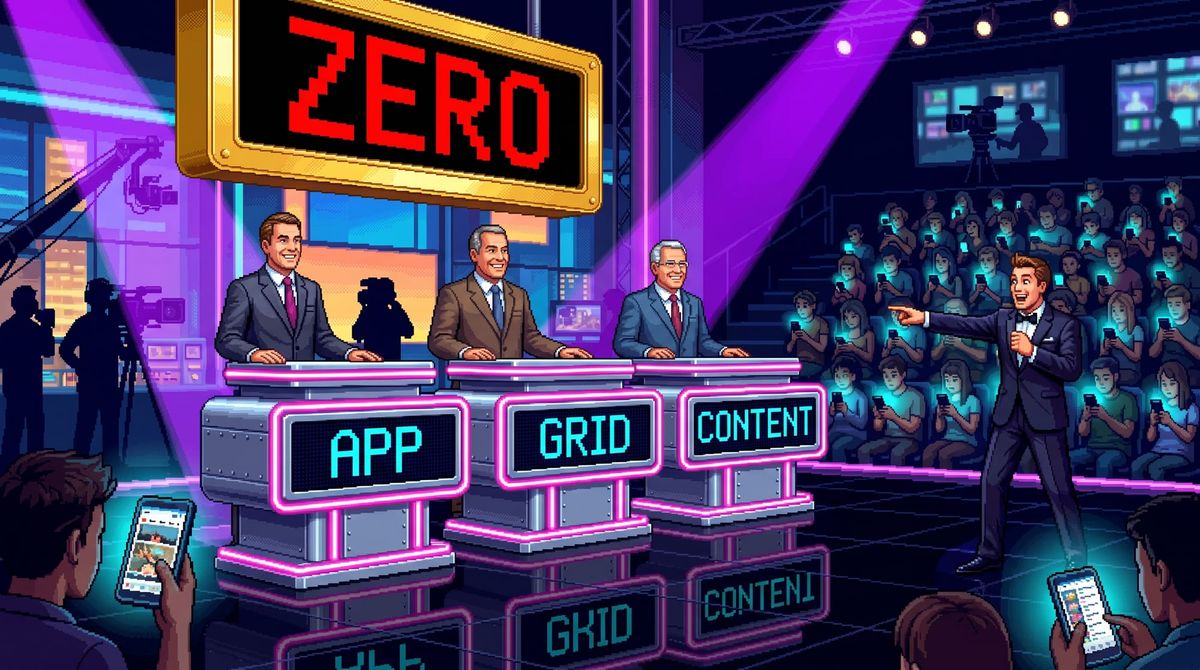
If the audience is still there, the viewing behavior is still there, and the lean-back ritual is still there, why does legacy media keep losing this fight?
Because it's still operating under three foundational delusions, and each one is costing real money every quarter they refuse to abandon it.
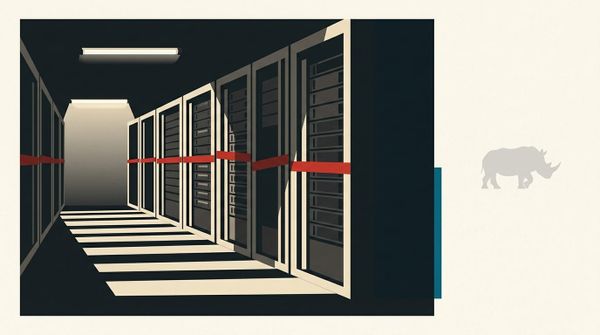
Delusion #1: "If We Build a Better App, the Audience Will Come Back"
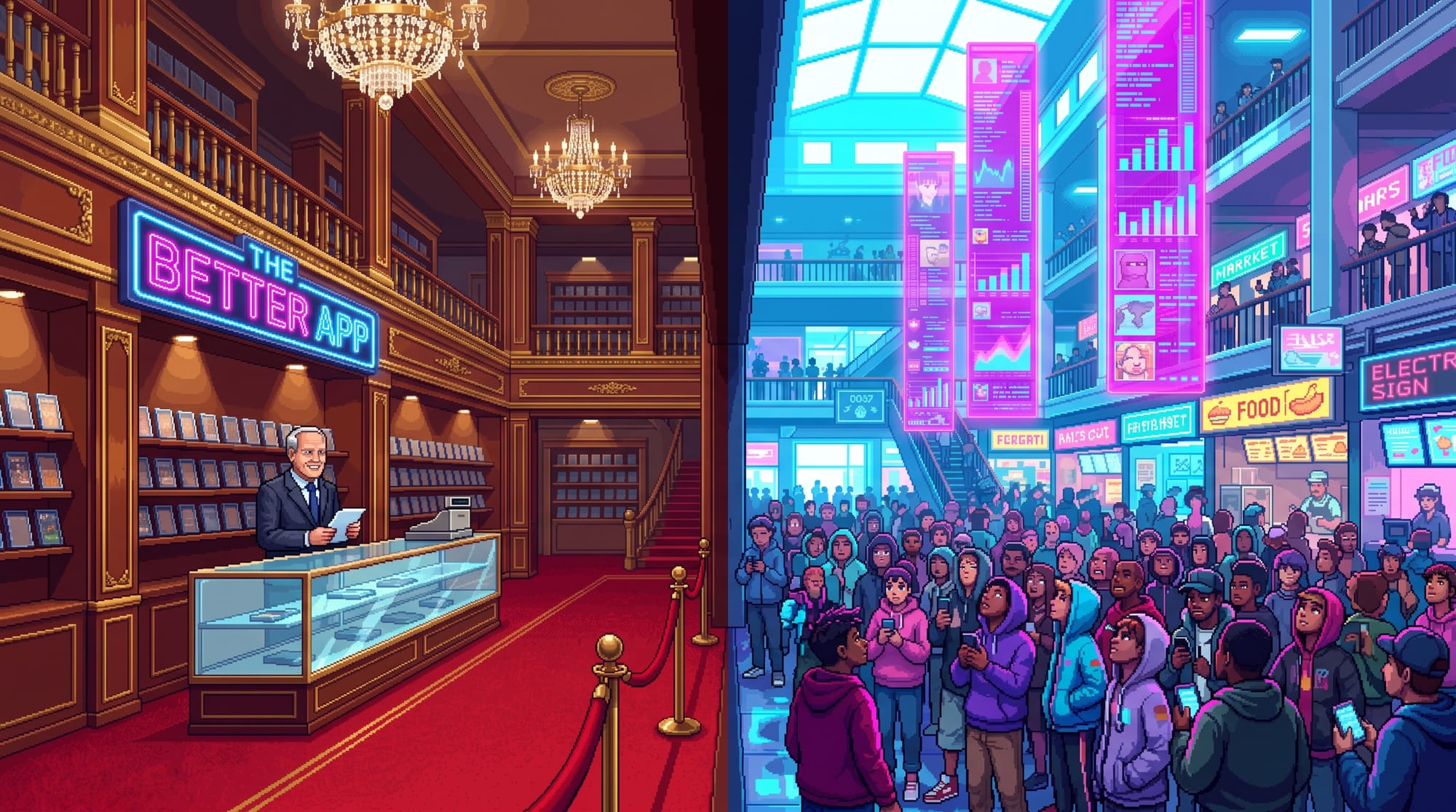
This is the delusion that powered the streaming wars. Every major conglomerate — Disney, Warner, Paramount, Peacock, Max, Discovery+ — has spent the past five years racing to build the "better app." Better interface. Better recommendations. Better bundling. More exclusive originals. The assumption underneath every initiative: the audience is looking for an app and will pick the best one available.
The audience isn't looking for an app. The audience is already in an app. It's called YouTube, and they opened it before sitting down on the couch. The Control Layer for the living-room TV no longer routes through legacy media's apps. It routes through the feed.
Gen Z doesn't browse a roster of streaming services and decide which to open. They default to the feed, and only leave the feed when a creator specifically tells them to watch a premium show — at which point they open the SVOD service, watch that specific show, and leave.
The SVOD app has been demoted from primary destination to utility. It's the video store the viewer walks to when the creator economy hands them a specific recommendation. It isn't where viewing starts. Building a better video store doesn't fix this problem. The viewer already left the building.
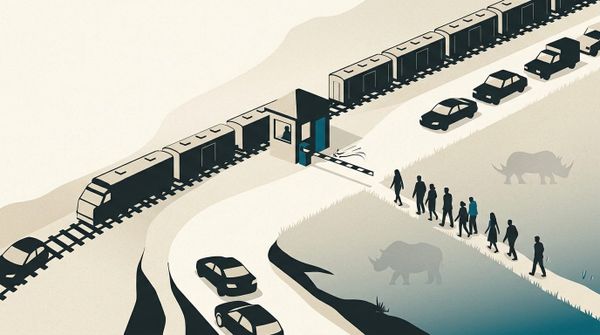
Delusion #2: "FAST Is the Future of Linear"
This one is more insidious because it contains a partial truth. Free ad-supported streaming is growing. More than half of SVOD subscribers now have at least one ad-supported tier (Deloitte Digital Media Trends, 2025). The shift away from premium SVOD toward AVOD is real.
But legacy media has consistently misread this shift as a victory lap for traditional FAST platforms. It isn't. 43% of Gen Z prefer YouTube or social video as their top video consumption platform. Just 8% prefer free streaming (AVOD & FAST) (Activate Technology & Media Outlook 2026, via Variety). The free-streaming victory legacy FAST keeps claiming has gone to the algorithm, not the EPG. FAST "won" the free-video shift the same way Blockbuster "won" the home-video shift in 2006. Yes, technically more video is being watched on these platforms than five years ago. No, they aren't beneficiaries of the trend.
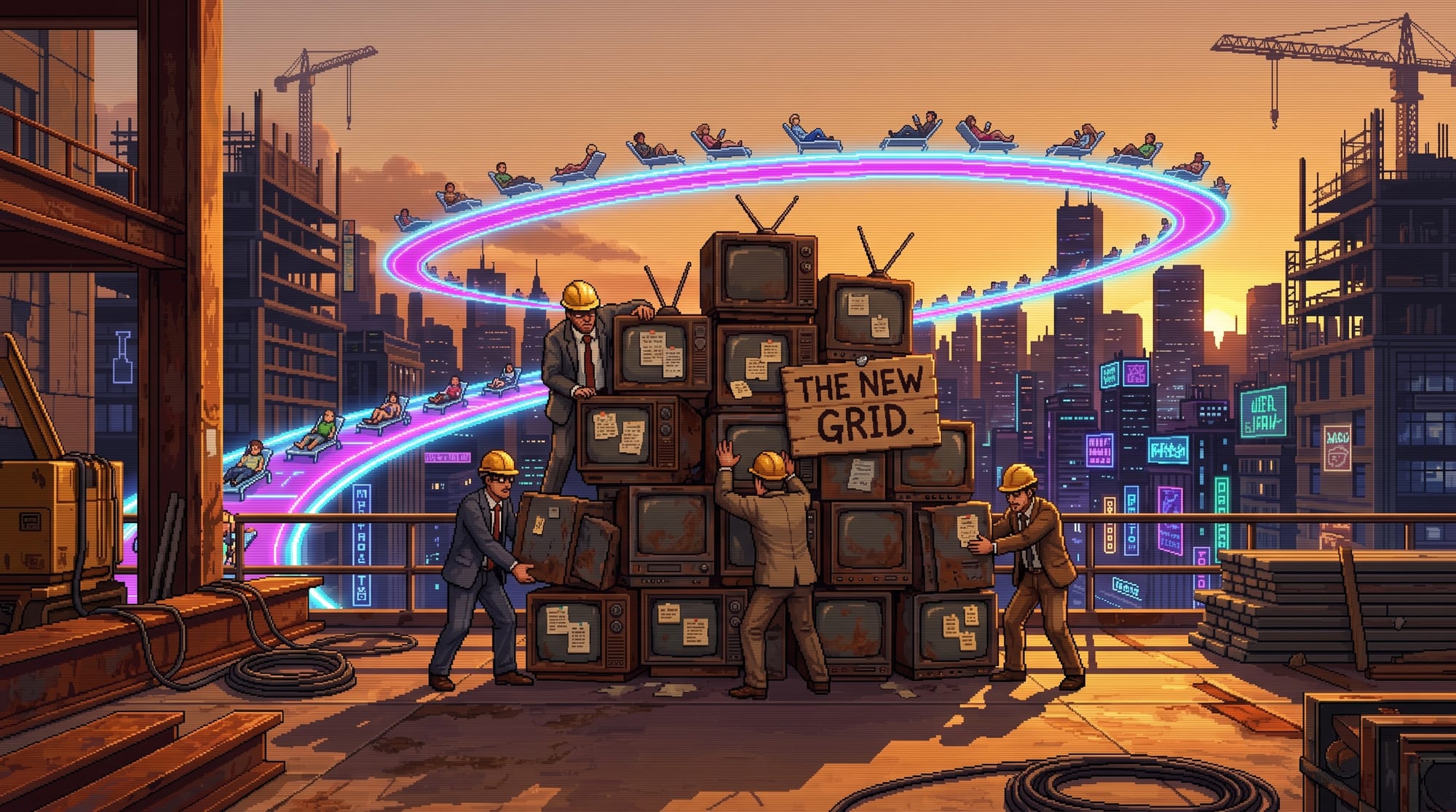
The existential problem for traditional FAST is architectural. It runs on an Electronic Program Guide grid — hundreds of channels organized by legacy television genres, scrolled through one at a time like a cable-box menu. This is the cable box reconstructed in the cloud, and it was never going to survive first contact with a generation raised on algorithmic feeds. A FAST grid asks the viewer to do work — scroll, evaluate, select — that the feed does for them automatically.
YouTube Stations is the killing blow. Once any creator can convert a playlist into a 24/7 linear stream with one click, the entire premise of legacy FAST — that they control the pipeline for ad-supported linear — collapses. The pipeline is now open-source. The only remaining moat is Cross-Studio Thematic Curation — a "90s Action" super-channel pooling Paramount, Sony, and Lionsgate, the kind of structure YouTube's architecture genuinely can't replicate. Exploiting that moat requires studios to collaborate across brand lines, which hasn't been a historical strength of the industry.
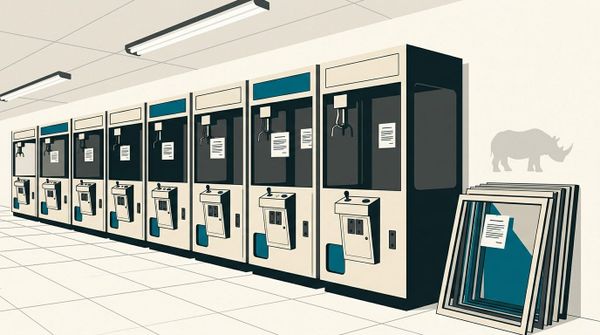
Delusion #3: "We Just Need Better Content"
This is the most expensive delusion of all, because it has directly funded tens of billions of dollars in failed original programming over the past decade.
The content is fine. The content is, in many cases, historically great. The problem was never the quality of what HBO or Netflix or Apple is making. Prestige television in 2026 is on a creative run as strong as any decade in the medium's history. The problem is that premium content sitting inside a walled SVOD app doesn't find its audience, because the audience's discovery habits no longer route through walled SVOD apps. They route through the feed.
This is why the same episode of House of the Dragon that gets buried inside Max's homepage can simultaneously generate hundreds of millions of TikTok impressions as a recut fan edit. The content is finding the audience. It's just finding them on the wrong platform, through the wrong discovery mechanism, with the SVOD subscription that would actually monetize the viewing nowhere in sight.
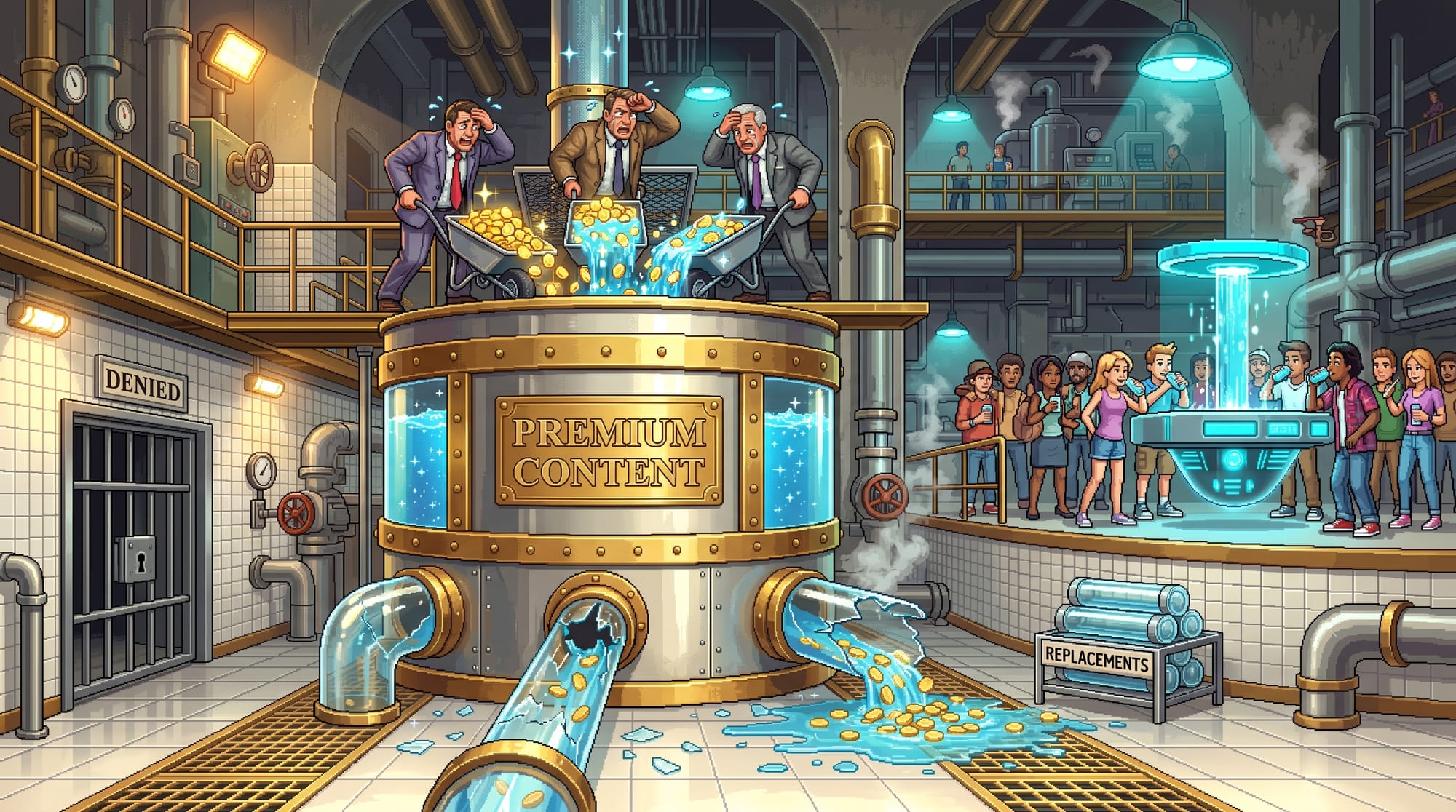
This is the Distribution Problem. Legacy media keeps trying to solve it by spending more money on content. It's like trying to solve a drought by building a larger reservoir. The water is fine. The pipes are broken.
Stop building reservoirs. Fix the pipes. The Conclusion lays out how.
An audit of who actually owns Gen Z's living room.
Part I — Gen Z Didn't Kill Linear TV. They Switched Networks.
Part II — Linear Was Never the Cable Box
Part III — YouTube Is The New NBC. TikTok Is The New MTV.
Part IV — Creators Replaced the Talent. Algorithms Replaced the Programmers.
Part V — The Three Delusions Legacy Media Won't Abandon (you are here)
Conclusion — Gen Z Didn't Kill TV. Legacy Media Stopped Owning It. (5/19)