The CTV Fallacy: Why Pluto, Tubi, and Roku Demand Different Ad Strategies
One-size-fits-all CTV planning leaves money on the table. The March 2026 FASTMaster Study reveals that Pluto, Tubi, and The Roku Channel reach distinct audiences with unique behaviors. Stop averaging your reach—discover why specific platform strategies are essential for real ROI.

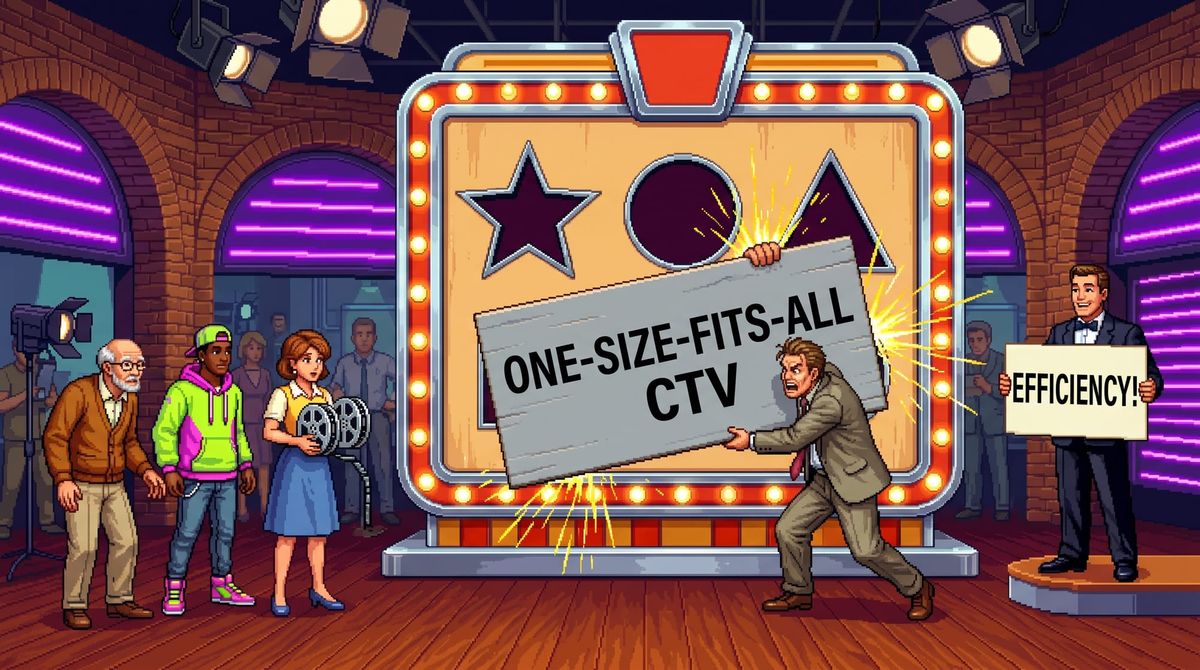
The cheapest way to overpay in connected TV is to treat free streaming as a single audience. It isn't one. It is several — sitting on different platforms, watching for different reasons — and a media plan that buys it as one blends all of that into an average no actual viewer matches.
The audience underneath those differences is a serious one. The heavy free streaming user — 32% of the audience, seven or more hours a week — is the core of the medium, and the core does not distribute evenly. Where a viewer spends those hours changes who a buyer is actually reaching.
That last point is the one the upfront deck keeps flattening. Reach3 Insights' FASTMaster Study — the Free Streaming Tracker, a quarterly read on U.S. free streaming viewers — fielded its March 2026 wave across 3,077 streaming users, including 2,002 active free streaming viewers, and one banner in it splits the audience by most-used platform.
The result is three distinct audiences with three different reasons to buy. Pluto, Tubi, and the Roku Channel each reach a different viewer. A CTV plan that buys all three with one creative and one set of targeting assumptions is leaving optimization on the table — and calling it efficiency.
Pluto's most-used audience over-indexes 45 to 64 and behaves like exactly what it is: a satisfied, value-seeking viewer that knows why it is there — 83% cite that it is free as a reason for use. At 4.3% earning $150,000 or more, against a free streaming average of 8.8%, this is not a premium niche and was never pretending to be. It is mass reach that knows its own mind — the audience broad-CPG and value-retail should be planning against, not apologizing for.
Tubi's most-used audience over-indexes 18 to 34 and carries the steepest growth profile of any major free streaming platform measured here — nearly half its 18-to-34s say they are watching more than they were six months ago. This is the entry point to connected TV — the next-generation viewer that QSR, DTC services and entertainment are racing to reach before the habit hardens into someone else's.
The Roku Channel's most-used audience is the broadest cross-section of the three, and the most candid about the medium's value anchor: 80% cite that it is free as a reason for use. At 7.2% earning $150,000 or more, its premium share sits closest to the free streaming average of 8.8%. This is balanced reach — the widest mix of categories and demographics in a single buy, for the advertiser who wants range rather than one sharp skew.
The figure nobody seems to put in front of buyers is what these viewers actually want from an ad — and relevance and context sit on top, well above the novelty formats. The verdict isn't the ranking. It's that this is an audience that rewards creative built for the screen, and quietly ignores the retread linear spot. (The full format-preference ranking is in the Ad formats tab above.)
And the premium tier wants the advanced formats more, not less — the opposite of what "premium audience, light touch" planning assumes. That is the case for premium inventory in one line: the highest-value households are the ones most receptive to the higher-value formats. For a platform seller, that is not a generic free streaming CPM — it is a format-and-audience argument. (The premium over-index by format is in the same tab.)
Which brings it back to the heavy streamers. These are the appointment viewers of free streaming — the third of the audience that has moved the medium from supplement to first choice. They find what they want, they act on what they see, and they have already settled the question between free streaming and cable. That is not residual reach to be mopped up at the end of a plan. That is an audience to sell as appointment viewing — and to price like it.
The platform splits above come from the March 2026 wave. The full platform cube — platform-by-category recall, ad-format preference by platform, and heavy-user behavior by platform — sits in the Wave 3 report, which is available to purchase. Contact Reach3 Insights to purchase the full Wave 3 results and data.
Methodology
Findings drawn from Reach3 Insights' FASTMaster Study (Wave 3), fielded March 2026 across 3,077 U.S. streaming users aged 18-64, including 2,002 active free streaming viewers. Brand recall reflects respondent-reported association with free streaming and is not verified against actual ad placement; figures are most useful for directional comparisons across waves and within categories. Action-taken metrics are self-reported, consistent with standard ad-effectiveness measurement methodology across major industry trackers.