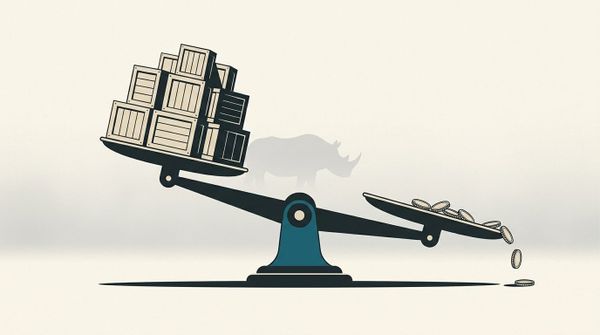
Valve keeps up to 30 cents of every dollar spent on Steam — over $3bn in 2024. A class-action lawsuit, European rules, and a Google courtroom loss are now all pressing on that cut at once.
Valve runs Steam, the dominant store for PC games, and it keeps up to 30 cents of every dollar spent there — more than $3bn in 2024 on $10.8bn of sales. Three forces are now squeezing that cut at once: a class-action lawsuit certified in November 2024 that reaches back to January 2017, Europe's Digital Markets Act forcing big platforms to allow rivals, and a jury verdict that branded Google's app store an unfair monopoly. The legal target is Valve's price-matching rule, which stops publishers selling cheaper elsewhere.
The market underprices this because the 30% has shrugged off four years of suits and Valve is private, with no shareholders demanding change. But the coalition pushing back is the widest it has ever been.
The most exposed are publishers that lean on Steam: Electronic Arts, Take-Two Interactive, Ubisoft, and CD Projekt all pay Valve's cut on much of their PC revenue. Microsoft is exposed both as a games publisher and as the owner of a rival store facing the same regulatory pressure.
Why this matters. Valve takes up to 30 cents of every dollar spent on Steam, and that cut is now under attack from a class-action lawsuit, European rules, and a courtroom loss for Google's app store. If the price-matching rule that props up the 30% falls, cheaper rivals could pull billions in sales away. Anyone lending to, running, or investing in a games company that leans on Steam — or on similar store fees — should watch how far this spreads.
Blindside · Gaming
Steam's 30% Cut Under Siege
Lawsuits, regulators, and precedent are circling Valve's biggest revenue line
Building
75
Blindside index
What drives it — drag to test
each slider starts at our cited estimate — drag to see the range
Valve's average cut that could get squeezed26%
Sourced — tiered 30% to $10M, 25% to $50M, 20% above; averages about 26%; over $3bn on $10.8bn of sales in 2024.
Slice of the cut competed or sued away40%
Our judgment — a phone-store-style drop from 30% to about 18% would erase roughly 40% of the cut.
Extra damage from lawsuits beyond the rate cut+12%
Our judgment — the lawsuit seeks back-payments to January 2017 plus an end to Valve's price-matching rule; not yet sized.
Time to impact
2–5 yearsBuilding
now3 yrs7+ yrs
When the financial hit begins to land, on our read.
How to read this. Drag any slider to test your own number — the chart and index update live. The likelihood and the locked facts stay put.
Yearly Steam sales value at risk
$1.3bn12.17% of sector
Dark line = most likely · faint lines = low–high (8 in 10 outcomes land between) · shaded band = what outside analysts expect
Our estimate lands within what outside analysts expect ✓
Chance this is a permanent shift, not a blip
43%
Average of five independent reads (range 32–52%):
The base rate45%
Store cuts are under global pressure, but Valve isn't a regulated gatekeeper and PC isn't a locked phone duopoly.
How it works52%
Valve's price-matching rule is the legal target; strike it and rivals at 12-15% undercut the 30%.
The skeptic's case32%
The 30% has survived four years of suits; developers stay for the audience, not the price.
The optimist's case35%
Valve is private with no shareholders demanding a cut; the suit could settle without touching the headline rate.
What forecasters say50%
Big publishers facing soaring costs now have their strongest-ever reason to back rivals; the plaintiff group is widening.
Fixed — the sliders change the size of the hit, not the odds it's permanent.
Why this matters
Valve takes up to 30 cents of every dollar spent on Steam, and that cut is now under attack from a class-action lawsuit, European rules, and a courtroom loss for Google's app store. If the price-matching rule that props up the 30% falls, cheaper rivals could pull billions in sales away. Anyone lending to, running, or investing in a games company that leans on Steam — or on similar store fees — should watch how far this spreads.
Most exposed companies
Electronic Arts EA · Take-Two Interactive TTWO · Ubisoft UBI.PA · CD Projekt CDR.WA · Microsoft MSFT
🔒
The facts — locked
measured, not editable
$10.8bn
Games sold $10.8bn on Steam in 2024, up 24% from the year before
analyst estimate (WN Hub)
>$3bn
Valve's commission from Steam topped $3bn for the first time in 2024
analyst estimate
30/25/20
Tiered cut: 30% up to $10M in sales, 25% to $50M, 20% above that
Valve / Steamworks
Nov 2024
November 2024 — the Wolfire lawsuit won class-action status, covering the 30% paid since January 28, 2017
Judge Jamal Whitehead (W.D. Wash.)
$20M
June 2025 — Valve accused of refusing to pay $20M in arbitration fees
court filings / Topclassactions
Mar 2024
March 2024 — Europe's Digital Markets Act fully in force; big platforms must allow rival stores and payments
European Commission
monopoly
In Epic versus Google, a jury found Google's app store an unfair monopoly
US federal jury (Epic v. Google)
Attention is climbing. the market is starting to price this in — the early window is closing.
Our middle estimate puts $1.3bn of yearly Steam sales value at risk (range $1.0bn–$1.7bn, about 12% of the $10.8bn sold on Steam in 2024), driven by the November 2024 Wolfire class-action ruling, Europe's March 2024 Digital Markets Act, and the Epic versus Google monopoly verdict. Steam's 30% cut has held through four years of lawsuits. We rate this Building (index 75/100; 43% chance of a permanent shift) because Steam's grip on PC players stays strong — but the mix of lawsuits, regulation, and publisher cost pressure is the broadest it has ever been.