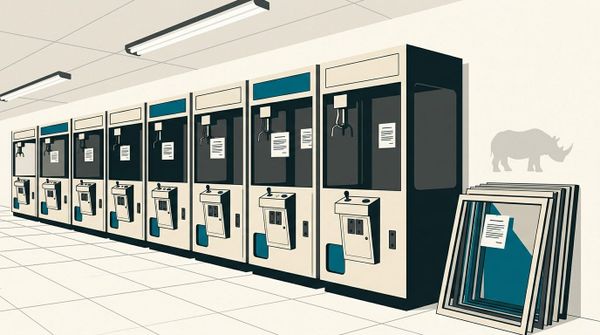
New York is suing Valve, eight states are suing Roblox, and regulators already fined a prize-box maker. The billions games earn from random loot and item-betting just stopped being safe money.
Regulators on two continents are moving to shut down two big ways games make money: selling random prize boxes and letting players bet rare in-game items for real cash. On 25 February 2026 New York's top lawyer sued Valve, calling the prize boxes in its games illegal gambling and demanding a permanent ban plus three times the profits back. Eight US states are suing Roblox over children gambling, and federal regulators already fined the maker of Genshin Impact 20 million dollars.
The market still treats this income as safe. It isn't. Belgium and the Netherlands already banned paid prize boxes, and gambling regulators usually win the argument eventually. Our middle estimate is 2.0 billion dollars of yearly revenue at risk, about a quarter of the 8 billion dollar exposed base.
Roblox faces eight states directly. Take-Two Interactive owns the Counter-Strike item-betting market named in New York's suit. Electronic Arts and Tencent both lean heavily on prize-box sales. Sea Limited's games use the same mechanics across Asia.
Why this matters. Courts and regulators in several countries are attacking the money games make by selling random prize boxes and letting players bet rare items, a trade worth billions a year. If they win, game makers lose a fast-growing revenue stream, must hand back past profits, and pay fines. Anyone who lends to, runs, or invests in these companies should treat that income as fragile, not reliable.
Blindside · Gaming
Regulators Move to Kill Game Gambling
Lawsuits target the money flowing through in-game items and prize boxes
Imminent
91
Blindside index
What drives it — drag to test
each slider starts at our cited estimate — drag to see the range
Revenue tied to the targeted features and places55%
Our judgment — prize boxes plus item-betting in the states and Europe now bringing cases.
Targeted revenue actually killed by bans and court orders35%
Our judgment — depends on how courts and regulators land; outcomes still uncertain.
Extra cost from clawbacks, fines, and refunds+30%
Sourced — New York wants triple the profits back; regulators already fined one studio twenty million dollars.
Time to impact
1–4 yearsImminent
now3 yrs7+ yrs
When the financial hit begins to land, on our read.
How to read this. Drag any slider to test your own number — the chart and index update live. The likelihood and the locked facts stay put.
Likely yearly revenue lost across the sector
$2.0bn25.33% of sector
Dark line = most likely · faint lines = low–high (8 in 10 outcomes land between) · shaded band = what outside analysts expect
Our estimate lands within what outside analysts expect ✓
Chance this is a permanent shift, not a blip
66%
Average of five independent reads (range 50–78%):
The track record66%
Belgium and the Netherlands already banned paid prize boxes; gambling regulators usually win the argument in the end.
How it works78%
A state attorney general has sued, regulators already fined, and cashing items out for real money is the legal hook.
The skeptic's case50%
Valve says it doesn't run the betting sites; past US suits were thrown out and some courts ruled items aren't money.
What the courts show70%
New York's suit, an eight-state Roblox push, and Europe's recommendation form one coordinated, multi-country squeeze.
The bigger picture65%
The children angle is politically hard to resist; platforms can be pressured to cut the betting pipe without any verdict.
Fixed — the sliders change the size of the hit, not the odds it's permanent.
Why this matters
Courts and regulators in several countries are attacking the money games make by selling random prize boxes and letting players bet rare items, a trade worth billions a year. If they win, game makers lose a fast-growing revenue stream, must hand back past profits, and pay fines. Anyone who lends to, runs, or invests in these companies should treat that income as fragile, not reliable.
Most exposed companies
Roblox RBLX · Take-Two Interactive TTWO · Electronic Arts EA · Tencent TCEHY · Sea Limited SE
🔒
The facts — locked
measured, not editable
Feb 25 2026
NY AG sued Valve — CS2/Dota2/TF2 loot boxes as illegal gambling
NY AG / HLTV
$4.3bn
Steam skin economy the NY suit targets ($5–6bn at peaks)
Outlook Respawn / PriceEmpire 2025
$2.8bn
CS skin-betting market value 2025 (was $2.5bn 2024)
Esports Insider
3x
disgorgement + permanent injunction NY is demanding
NY AG complaint 2026
$20M
FTC fine on Genshin dev for loot boxes to under-16s
FTC 2025
8 AGs
states suing Roblox (TX/LA/FL/KY/IA/TN/NE/AR); minors-gambling claim advancing
Yahoo / Harvard tagteam 2026
under-16 ban
EU IMCO committee recommends loot-box ban for minors
European Parliament IMCO, Oct 2025
Attention is climbing. the market is starting to price this in — the early window is closing.
New York's 25 February 2026 suit against Valve seeks a permanent ban and triple the profits handed back on a 4.3 billion dollar item economy; our middle estimate is 2.0 billion dollars lost a year, about 25.4 percent of the 8 billion dollar exposed base. Eight states are pressing matching child-gambling claims against Roblox, and federal regulators have already fined a prize-box maker 20 million dollars. The 'it's third-party sites, not us' defense has not survived a single place that looked hard at the children angle.