DRIVEN, RESILIENT, FRAGILE: The Three-Way Endorsement-Sensitivity Model
Why a pop-star bashing the NFL moves nothing, but the Super Bowl halftime pick moves everything. Three sensitivities, twenty-four classified brands, the half-time-show fork.
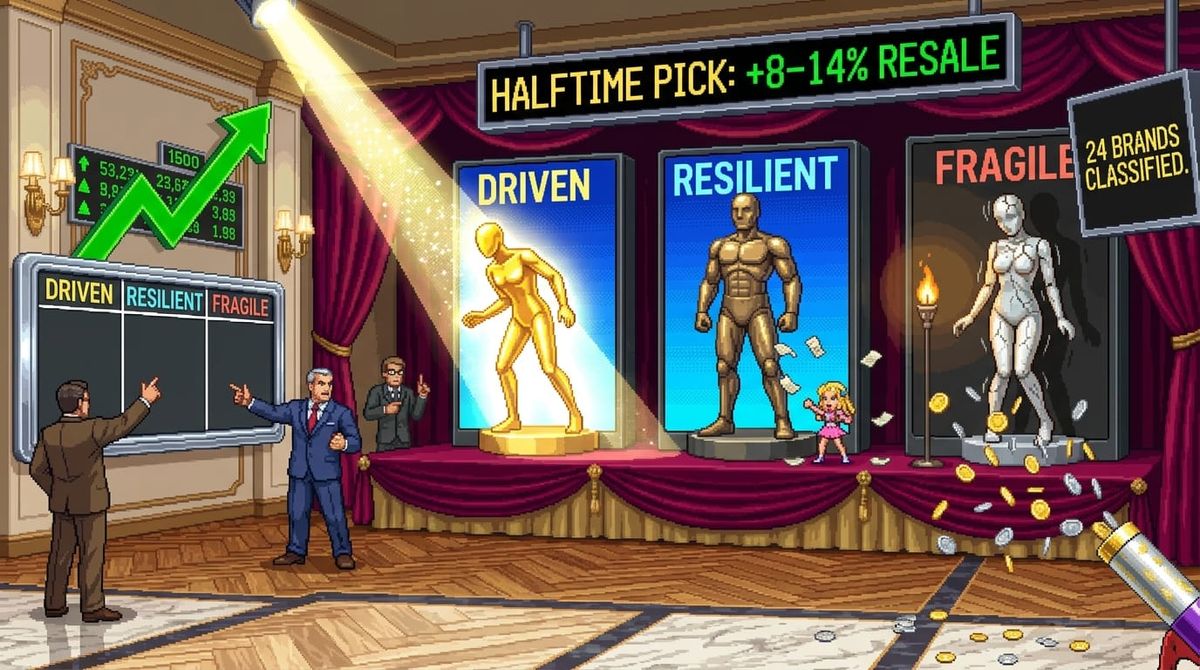
On February 12, 2023, Rihanna headlined the Super Bowl LVII halftime show. The performance — Rihanna's first live performance in five years — was watched by an audience of approximately 121 million in the U.S. The NFL's 2023 regular-season ticket-resale market saw the largest year-over-year per-game premium increase in the modern data window (estimates from SeatGeek and Vivid Seats put it at 8–14% above 2022 baseline). The halftime pick moved the NFL's market.
In 2024, Snoop Dogg served as NBC's special correspondent for the Paris Olympics — attending events across multiple venues and carrying the torch in the relay. Opening-ceremony viewership hit approximately 28.6M for the U.S. broadcast, up substantially from Tokyo 2020. NBC's ad rates for the Games sold at premium across the cycle.
In 2025, the NFL has, multiple times, faced public criticism from pop stars and celebrities. None of these instances measurably moved the NFL's ticket-resale market, viewership, or ad rates. The league absorbed the criticism the way the NFL has always absorbed criticism: as background noise.
These three facts describe the same brand — the NFL — responding to celebrity-association events in three structurally different ways. The framework that explains why is the endorsement-sensitivity model: brands have one of three sensitivities to celebrity association, and predicting how a brand will respond to a celebrity event requires knowing which.
We catalogued the pattern by accident. Over three weeks we built a procedural simulator of cultural-asset markets and discovered that most brand-celeb analysis conflates three distinct things. Once they're disentangled, the model is straightforward — and most documented endorsement cycles fall cleanly into one of the three.
Three sensitivities
Most brand-celebrity analysis assumes a single dimension: how much does celebrity X help or hurt brand Y? The endorsement-sensitivity framework decomposes this into three categorical types.
Pick a brand from the roster to see its sensitivity classification, the structural reason, and the documented cases that demonstrate it.
DRIVEN brands are where the celebrity is the product. The star power is what's being sold. Music tours are the canonical case: the artist's ticket is the artist. Combat sports (boxing, MMA) are DRIVEN by the fighter's pre-fight cycle. Sports-entertainment (WWE) is DRIVEN by the storyline and the wrestler. For a DRIVEN brand, the celebrity's hype, scandal, or cycle directly moves the product. A controversial fighter's pay-per-view sells more, not less — the controversy is the asset. An artist's cancellation cycle craters their tour — the celeb cannot drop themselves; the tour ticket and the celebrity are the same instrument.
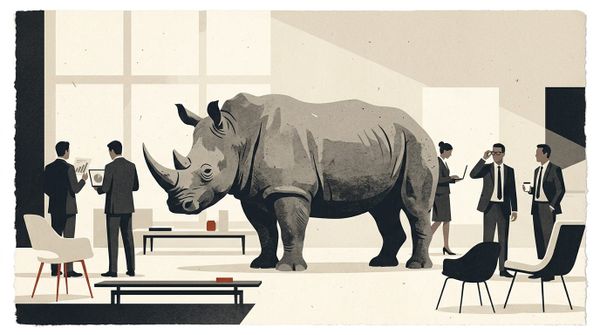
RESILIENT brands are institutions that dwarf any single celebrity association. Most established sports leagues (NFL, NBA, MLB, NHL, UEFA Champions League) are RESILIENT. A pop star's diss has no measurable effect on NFL ticket prices. A celebrity endorsement of an NBA franchise has minimal impact on season-ticket renewal rates. The institution's brand-equity overwhelms any individual celebrity input. RESILIENT brands generate their cycles from structural drivers — matchup quality, playoff implications, sell-out dynamics, expiration cliffs — not celebrity moves. This is the category most over-allocated celebrity-event coverage in trade press.
FRAGILE brands have a RESILIENT core but a load-bearing celebrity slot. The Super Bowl is the canonical case: the game itself is bulletproof — it will sell out, generate the highest TV audience of the year, drive the ad-rate cycle — but the halftime-show pick is a meaningful fork. A hype pick (Rihanna 2023, Kendrick Lamar 2025, Usher 2024) boosts the broader event's commercial cycle. A controversial pick can produce measurable cultural drag — viewership doesn't drop, but cultural-conversation-around-the-event becomes a liability. A mid pick produces no movement. The FRAGILE classification is RESILIENT-plus-a-fork: most of the brand is institutionally bulletproof; one slot can move the dial up or down.
Real-world distribution
The simulator's classification of 50 marquee-tier sports and entertainment brands distributes roughly as follows: ~28% DRIVEN, ~58% RESILIENT, ~14% FRAGILE.
DRIVEN exemplars include all music tours (the artist is the ticket: Beyoncé Renaissance Tour, Taylor Swift Eras Tour, Bad Bunny Most Wanted Tour all DRIVEN by definition), the WWE (where storylines and individual wrestlers are the product), the UFC (where pre-fight trash-talk cycles drive PPV sales), and Inter Miami as the canonical exception inside soccer's RESILIENT category — Messi is Inter Miami's product, in a way no other MLS club's signing has produced.
RESILIENT exemplars include the NFL, NBA, MLB, NHL, UEFA Champions League, the Premier League, and the four major U.S. tennis Grand Slams. Each of these institutions has been operating long enough that celebrity association is decorative rather than load-bearing. The NHL is at the most-RESILIENT end of the distribution — hockey has measurably the smallest celebrity-engagement footprint of any major North American sport.
FRAGILE exemplars include the Super Bowl, the Olympics (the opening ceremony specifically), the World Cup (the host-nation spectacle), and to a lesser degree the Met Gala (the host-and-theme pick) and major music-festival headliner slots when the festival has its own institutional brand (Coachella, Tomorrowland, Glastonbury). These brands are RESILIENT at the core — the event will run, the audience will arrive — but one slot decision per cycle can move the cultural cycle around the event meaningfully up or down.
The half-time-show fork
The FRAGILE classification's defining mechanic is the celebrity-slot fork. A marquee event sells a single celebrity slot per cycle (the halftime show, the opening ceremony, the headliner). That slot's pick determines a three-way fork:
- Hype pick → cultural-cycle boost around the event. Rihanna's 2023 Super Bowl halftime was a hype pick that compounded the NFL's broader 2023 brand cycle. Kendrick Lamar's 2025 Super Bowl halftime was a hype pick that produced sustained press coverage at premium tier through Q1 2025.
- Controversial pick → cultural-cycle drag. The 2025 Olympics opening ceremony's most-discussed segment (a tableau referencing Da Vinci's Last Supper, widely received as a controversial sequence) produced approximately 96 hours of negative cycle coverage and required a public apology from the organizers. The Games' overall ratings held — the institutional core absorbed the drag — but the cultural-conversation around the event tilted negative for the cycle window.
- Mid pick → no measurable movement. Most Super Bowl halftime shows fall here. The NFL's institutional brand carries the event regardless of whether the halftime pick lands.
The fork's amplitude is bounded — even a controversial halftime pick doesn't make the Super Bowl underperform commercially. But the cultural premium the event extracts from the cycle moves on the fork.
Eight rounds, sampled fresh from a pool of twenty-four. Read the description and classify the brand.
Why the model matters
For brands, the framework forces a calibration the trade press typically ignores. A DRIVEN brand should be allocating outsized resources to celebrity-management — the celebrity is the product. A RESILIENT brand should be allocating those same resources to structural marketing (matchup quality, ticket calendar, audience-development) — celebrity events are noise. A FRAGILE brand should be allocating significant resources to a single slot's pick — the rest of the brand will run on its institutional momentum, but the slot pick can produce or destroy a year's worth of cultural premium.
The most common misallocation is RESILIENT brands behaving as if they're DRIVEN — over-spending on celebrity endorsements that don't move the product. Multiple sports leagues have historically allocated 20–40% of marketing-team headcount to celebrity-partnership programs that, by the framework, should be allocated to structural drivers. The 2024 NBA's reduced celebrity-partnership program (post the 2022 industry-wide cost-rationalization) is a documented case of a RESILIENT brand recategorizing its own sensitivity correctly.
For investors, the framework helps separate brand-equity from celebrity-equity. Music-tour businesses (Live Nation's $LYV) are DRIVEN — the underlying valuation tracks the artist roster's individual hype curves. Sports-league businesses (the publicly-traded fragments of MLB through tracker funds, indirectly the NFL through partner brands) are RESILIENT — the underlying valuation tracks structural attendance, ad-rate cycles, and labor-agreement stability. FRAGILE event franchises (Super Bowl rights, Olympics broadcasting rights) are valued on the institutional core plus a per-cycle "slot quality" premium that the market prices implicitly.
For audiences, the framework explains why some controversies matter and others don't. A pop star bashing the NFL is RESILIENT-cluster noise — the framework predicts no movement, and that's what happens. A pop star headlining the Super Bowl is FRAGILE-slot input — the framework predicts a fork, and the fork shows up in the data. An artist's scandal during their own tour is DRIVEN-cluster input — the framework predicts direct ticket-price movement, and that's what happens.
The same celebrity event ripples differently through different brands not because of luck or PR skill, but because the brands occupy different sensitivity categories. Knowing which category a brand is in is the precondition for predicting how a celebrity event will move its commercial cycle.
🎮 Play this article in the game · Deck: Sports · Seed: Sensitivity Classification → dripdriphype.xyz/play?deck=sports&seed=sensitivity_halftime&piece=W12