Fast food's growth model is eating itself alive
Fast food overbuilt, overtrained customers to hunt discounts, and over-leveraged its operators. The brand names still look fine. The structure underneath them does not.

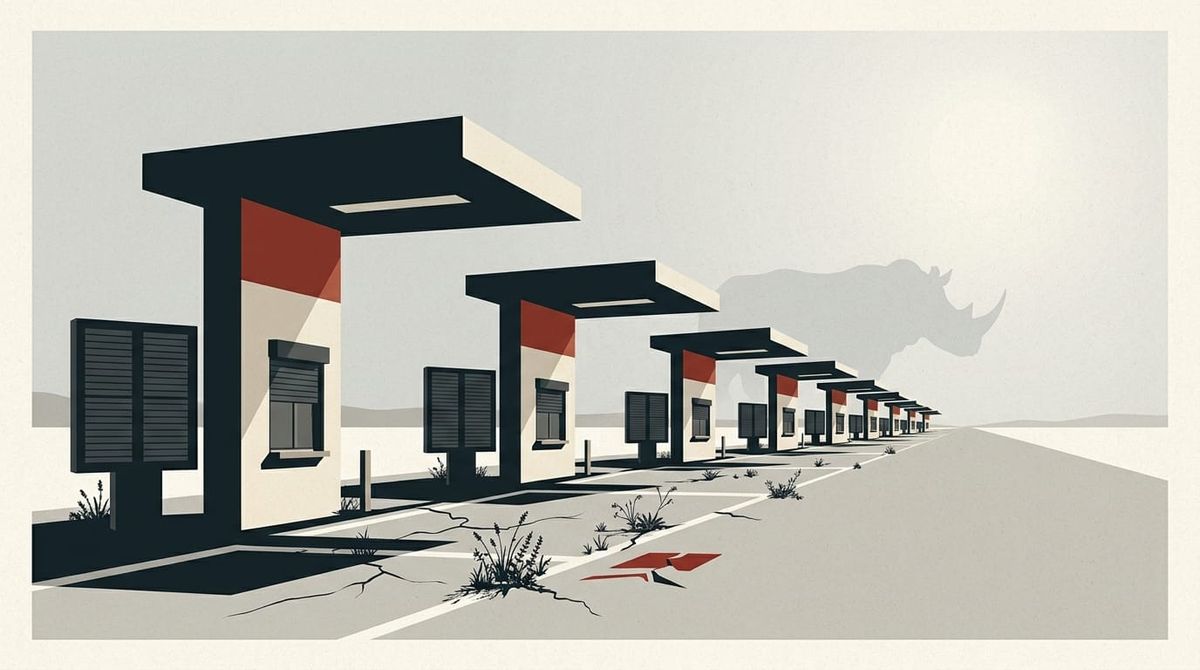
The industry built to scale is now being crushed by the very size it spent decades chasing.
Fast food's entire business logic rested on one assumption: more locations, more customers, more profit. That assumption is breaking down all at once. Chains overbuilt into a saturated map, trained customers to expect discounts through loyalty apps, and pushed prices up 77% in four years — then watched lower-income diners walk away anyway. The result is a sector generating enormous revenue while quietly destroying the economics underneath it.
The damage is landing hardest on the people closest to the actual restaurants. Independent franchise owners are being squeezed between wages, food costs, and royalty bills that arrive whether or not the store made money. At the same time, delivery apps are skimming 15–30% off a quarter of all orders, draining nearly $9 billion a year before the operator sees a cent. These are not temporary pressures. They are structural shifts that compound each other.
The market is slow to price this because the big brand names still look healthy at the top line. But top-line revenue increasingly disguises operator distress, shrinking traffic, and a workforce that is contracting. When the franchise system starts cracking, the brands that depend on it crack with them.
The threats in this sector
- Franchisee Margins Are Collapsing — $13.3bn/yr · Imminent
- Selling Restaurants With No Buyers — $8.5bn/yr · Building
- Royalties Owed on Empty Stores — $7.8bn/yr · Building
- The Discount Habit That Won't Quit — $7.0bn/yr · Imminent
- America Ran Out of Corners — $5.9bn/yr · Building
- Cheap Menus That No Longer Pay — $8.0bn/yr · Imminent
- Vanishing Workers Hit Fast Food — $6.7bn/yr · Imminent
- Beef and Coffee Reprice Permanently — $6.3bn/yr · Imminent
- Fast Food Runs Out of Price Room — $7.3bn/yr · Building
- Diet Drugs Cut Fast-Food Sales — $4.5bn/yr · Imminent
- The $60k Machine Buyout — $4.8bn/yr · Building
- Delivery Apps Skim Fast Food's Profit — $8.8bn/yr · Building
- Burgers Get Pricier, Margins Get Thinner — $4.2bn/yr · Building
- The Drive-thru Lots Stop Paying — $5.1bn/yr · Horizon
- New Franchise Rules Hit Royalties — $2.5bn/yr · Building
Each links to its live model. Blindside · FASTMaster Intelligence.