Why Fairground's AI Innovation Offers A New Future for FAST
Anyone who has worked in FAST channel operations knows the real bottleneck: programming, not content. A channel operator can license thousands of hours of film and television at manageable cost. What has never been manageable is producing the connective tissue — the interstitials, the countdowns, the hosted segments, the personality — that turns a playlist into a channel. Linear TV's competitive advantage was always the feel of being curated by someone. FAST channels surrendered that years ago, defaulting to back-to-back content with lower-thirds doing the work of warmth.
The reason was economics. A weekly 12-minute hosted segment — crew, talent, set, post-production — runs five figures per episode at minimum. For FAST operators running on CPMs where a strong channel might generate $3–5 in Europe or around $10 in the US, that math has never worked.
Carousel solves it. Custom avatar, custom set, multilingual narration, produced at a fraction of traditional studio cost — that's what Love TV Channels validated by converting their pilot into a long-term strategic partnership. The economics finally work.
This is precisely the structural shift that larger players like YouTube are also pursuing, from a different angle. YouTube's new Stations feature — 24/7 linear FAST-style streams built automatically from a creator's playlist — attacks the same problem at the distribution layer. Carousel attacks it at the production layer. Both are responses to identical audience behavior: people don't want to choose what to watch. They want something to already be on.
The B-Movie Idea, and Why It's Now Viable
Here is what this unlocks, concretely.
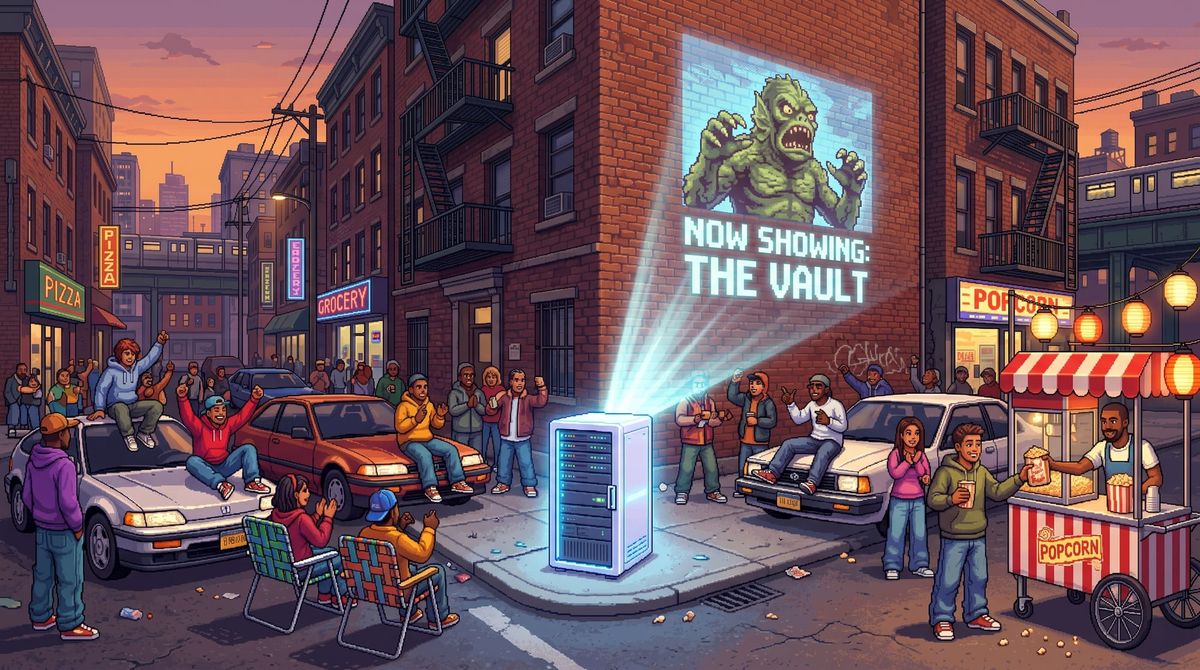
When I was at Amazon MGM Studios, I was developing a pitch for a FAST channel built around the AIP catalog — Vincent Price, Roger Corman, the full library that came through Orion and into the Amazon MGM vault — with a Gen Z host doing 5–10 minute intros before each film: what's problematic about this character, the red flags, the moments to watch for. The idea was to make classic genre cinema discoverable and relevant again through contemporary framing. Think Mystery Science Theater 3000 energy but earnest, educational, and built for an audience raised on "let me explain why this scene is actually insane."
The catalog practically writes the intros. Dr. Goldfoot and the Bikini Machine (1965) — Vincent Price as a mad scientist who literally manufactures women in his underground lair to deploy as honeypots for wealthy bachelors — is a five-minute Gen Z monologue waiting to happen. The Abominable Dr. Phibes (1971), where Price plays a grief-destroyed widower who murders the surgical team he blames for his wife's death using the ten plagues of Egypt, is a masterclass in toxic devotion with Art Deco production design. Theatre of Blood (1973), where he plays a Shakespearean actor who kills every critic who gave him a bad review using deaths from Shakespeare's plays, is the original main character disease. These films are extraordinary. They are also completely invisible on modern platforms because no one has built the on-ramp.
A re-org killed the pitch. But the production cost was always the real obstacle, not the concept.
That obstacle is gone. An AI avatar host, per-film scripted intros, sourced from existing library — that is exactly the format Carousel is designed to produce. The discovery problem is urgent: a 1965 spy-spoof horror-comedy with a theme song by The Supremes has zero algorithmic surface area on a FAST platform unless something points to it. A hosted show that opens with "tonight we're watching the film that basically invented Austin Powers, and Dr. Goldfoot is a walking red flag with a laboratory" — that is programming. That surfaces a library. That gets watched.
The question is no longer whether the technology can do this. It can. The question is what the regulatory and guild landscape permits — and here is where the conversation gets more interesting than the guilds would like to admit.
The Bigger Picture: AVOD, SVOD, and the Intro Layer
FAST is the proof of concept. The real prize is broader.
Everything Carousel demonstrates on a linear channel works — arguably works better — as a hosted intro layer baked directly into AVOD and SVOD platforms. Picture a "Vincent Price Collection" on a streaming service's main screen. The user clicks in, selects The Pit and the Pendulum, and before the film starts, a 90-second AI-hosted intro plays: what Corman was trying to do with color and widescreen on a drive-in budget, why Richard Matheson's script is doing something stranger than it first appears, what to watch for. Then the film. That is the Criterion Channel model — curated collections with genuine context — deployed at the scale and cost structure that a mid-tier AVOD platform can actually afford.
The conversion problem on SVOD and AVOD is actually harder than on FAST, and that matters. On a linear channel, the host is solving what should I watch. On a streaming platform, the user has already opened a collection — they've expressed intent. The hosted intro is solving am I going to commit to this specific film right now, which is the moment most catalog titles lose. A thumbnail and a 1964 synopsis don't close that gap. A 90-second host who makes the film feel urgent does.
The revenue math also improves. On AVOD, session time is inventory — a 90-second hosted intro isn't just marketing for the film, it is ad-supported content. Longer sessions, more completions, more ads served. On SVOD, higher per-title completion rates reduce churn by deepening the subscriber's relationship with the catalog. The 148% engagement lift Carousel demonstrated on FAST almost certainly understates the effect on a platform where the audience has already opted in.
And there is a product differentiation argument that matters increasingly in an oversaturated market. A "Vincent Price Collection with hosted intros" is a branded feature, not just a licensing deal. It gives a platform a reason to surface catalog it already owns and is paying to host. Netflix, Prime, Tubi, Peacock — every one of them is sitting on libraries with the same visibility problem. The economics of building this with traditional production are prohibitive. The economics with Carousel are not.
The 90-second format is already in Carousel's production suite. This is not a future capability. It is a current one looking for someone to deploy it correctly.