Arm Tripled. Intuit Halved. Why Wall Street Shorted AI Software
The first half of 2026 revealed a harsh truth about the AI trade: Wall Street paid everyone selling the infrastructure while shorting companies selling software. Arm Holdings tripled while Intuit shed over half its value, proving the market is buying physical steel over digital stories.

The Tape
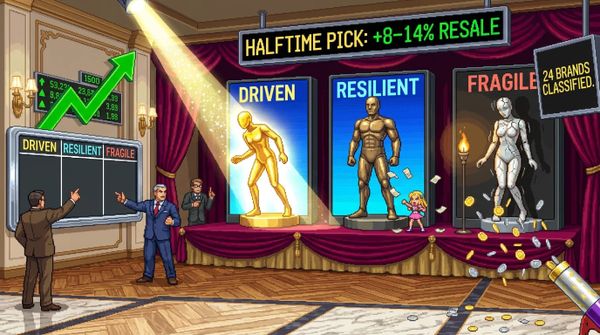
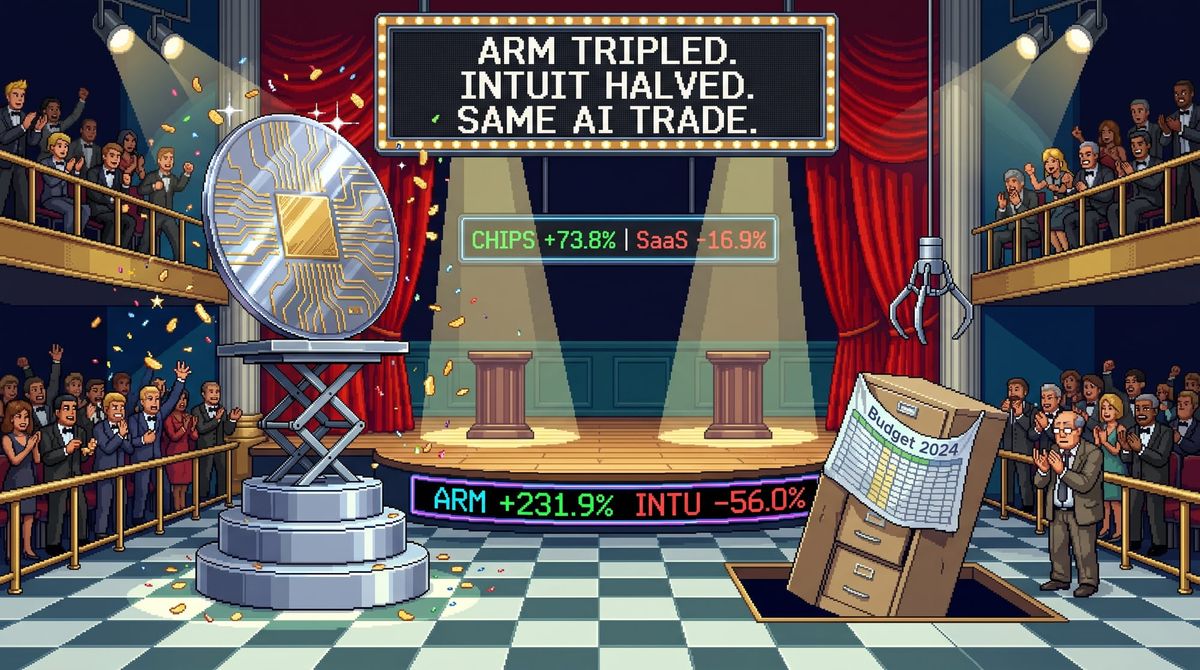
The market spent the first half of 2026 deciding it believed in AI — and then paid everyone selling the picks and shovels while shorting everyone selling the software those shovels run. Among the 21 hype baskets FASTMaster tracks (themes the market trades as stories, not the standard market sectors), the chip-heavy AI theme topped the board at +73.8% while the software/SaaS basket we file under Tech sat at #19 of 21, down -16.9%. Same story, opposite ends: Arm Holdings, which licenses the chip blueprints inside nearly every phone, tripled to +231.9% over the six months, while Intuit, which sells TurboTax and QuickBooks, lost more than half its value at -56.0%.
The Silicon Got Paid
The AI basket led all 21 themes for one reason: every name in it that fell was a software name, and every name that flew sold something you could put on a forklift.
Arm Holdings more than tripled at +231.9%, the year's biggest move among the themes FASTMaster tracks, as the data-center buildout bid up its designs. Right behind it, Marvell — which makes custom networking and AI chips — rose +212.9%, and Micron, the memory-chip maker whose parts the AI servers are starving for, added +211.2%. Three names, three roughly-tripled charts, one common trait: they ship hardware.
Even the basket's modest performers earned it. AMD, the second-place chip designer to Nvidia, gained +128.9% in the first half of 2026. In a basket built on AI, the silicon did the carrying — and the only laggards, as we'll see, were the ones selling subscriptions.
The Software Got Shorted
The Tech basket sat near the bottom of our board because the market stopped paying for subscription revenue, even while the very same AI story minted fortunes one layer down in the chips.
Intuit was the worst of it, down -56.0% over the six months. Adobe, which sells creative software by subscription, fell -38.8%, and Salesforce, the customer-management software giant, dropped -34.6% — a basket of recurring revenue that the market suddenly priced like it was going out of fashion. The trouble is that in 2026, AI showed up on these income statements as a cost to be paid, not a windfall to be booked.
The exception proves the rule. Alphabet, Google's parent, was the rare software name to rise, up +14.1% in the year's first half — and it happens to be the one that designs its own AI chips. The market, it turns out, will pay a software company that also makes silicon.
The Dividing Line
What the market was actually pricing wasn't AI versus no-AI — both baskets are stuffed with AI. It was who sells the buildout against who pays for it. Arm and Micron collect a check the moment a data center gets built; Salesforce and Adobe write one.
The cleanest tell sits inside the AI basket itself, not between the two. The biggest loser there was Palantir, the government-and-enterprise data-software firm, down -23.8% — the laggard in a winning basket was the software name. The market drew its line straight through the middle of AI and put the code on the wrong side of it.
So the half closes with the picks-and-shovels story beating the application story decisively, and a single uncomfortable question hanging over every name in the Tech basket: when does the AI you're spending on start paying you back?
What to watch in H2
Watch Salesforce. The company has bet its narrative on Agentforce, its AI-agent product, landing as new software revenue rather than another line of AI spending. If that revenue shows up on the income statement and the stock recovers from its -34.6% half, the market was wrong to short the software. If it doesn't, the dividing line holds — and the shovels keep getting paid while the software keeps paying.